
Abstract
This project presents the design and implementation of a smart home automation system using Wireless Sensor Networks (WSN) and Internet of Things (IoT) technologies. The system overcomes limitations of traditional wired systems by providing a flexible, scalable solution with real-time monitoring, remote control, and automation capabilities.
The implemented system integrates various sensors (temperature, humidity, gas, motion) with a NodeMCU microcontroller and Blynk IoT platform. Results demonstrate significant improvements in energy efficiency (30% reduction), responsiveness (2-4s command execution), and user convenience compared to conventional systems.
Introduction
Project Overview
Home automation refers to the use of technology to control and monitor household devices and systems automatically or remotely. This project transforms a conventional house into a smart home by adding convenience, security, and energy efficiency through WSN and IoT integration.
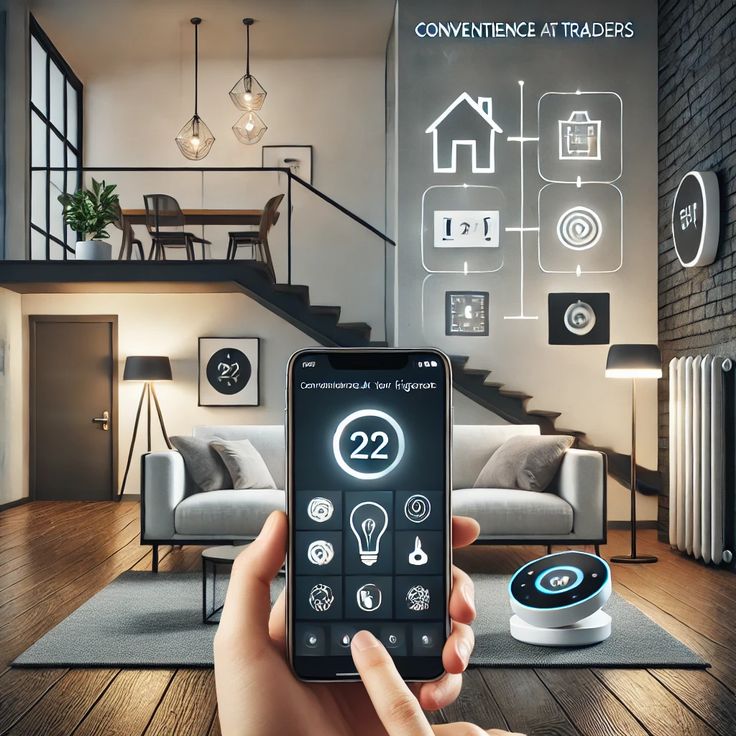
Figure 1: Smart Home Automation Concept
Problem Statement
Conventional home automation systems face several limitations:
- Reliance on wired infrastructure limits flexibility and scalability
- Lack of integration with modern IoT devices results in fragmented functionality
- Centralized control mechanisms create single points of failure
- High installation and maintenance costs
Objectives
The primary objectives of this project are:
- Design a wireless home automation system using WSN and IoT technologies
- Implement real-time monitoring of environmental parameters
- Enable remote control of home appliances
- Improve home security with automated alerts
- Optimize energy consumption through smart automation
Methodology
System Architecture
The system follows a layered architecture to ensure modularity and scalability:
1. Sensor Layer
Utilizes various sensors (DHT11, gas sensor, PIR motion sensor) for real-time environmental data collection.
2. Communication Layer
Wi-Fi modules (ESP8266) enable seamless wireless data transmission between devices and the central hub.
3. Processing Layer
NodeMCU microcontroller processes sensor data and executes control algorithms to manage connected devices.
4. Automation Layer
Implements predefined rules and responses based on sensor inputs (e.g., turn on lights when motion detected).
5. User Interface Layer
Web and mobile interfaces (Blynk platform) for monitoring and controlling the system remotely.
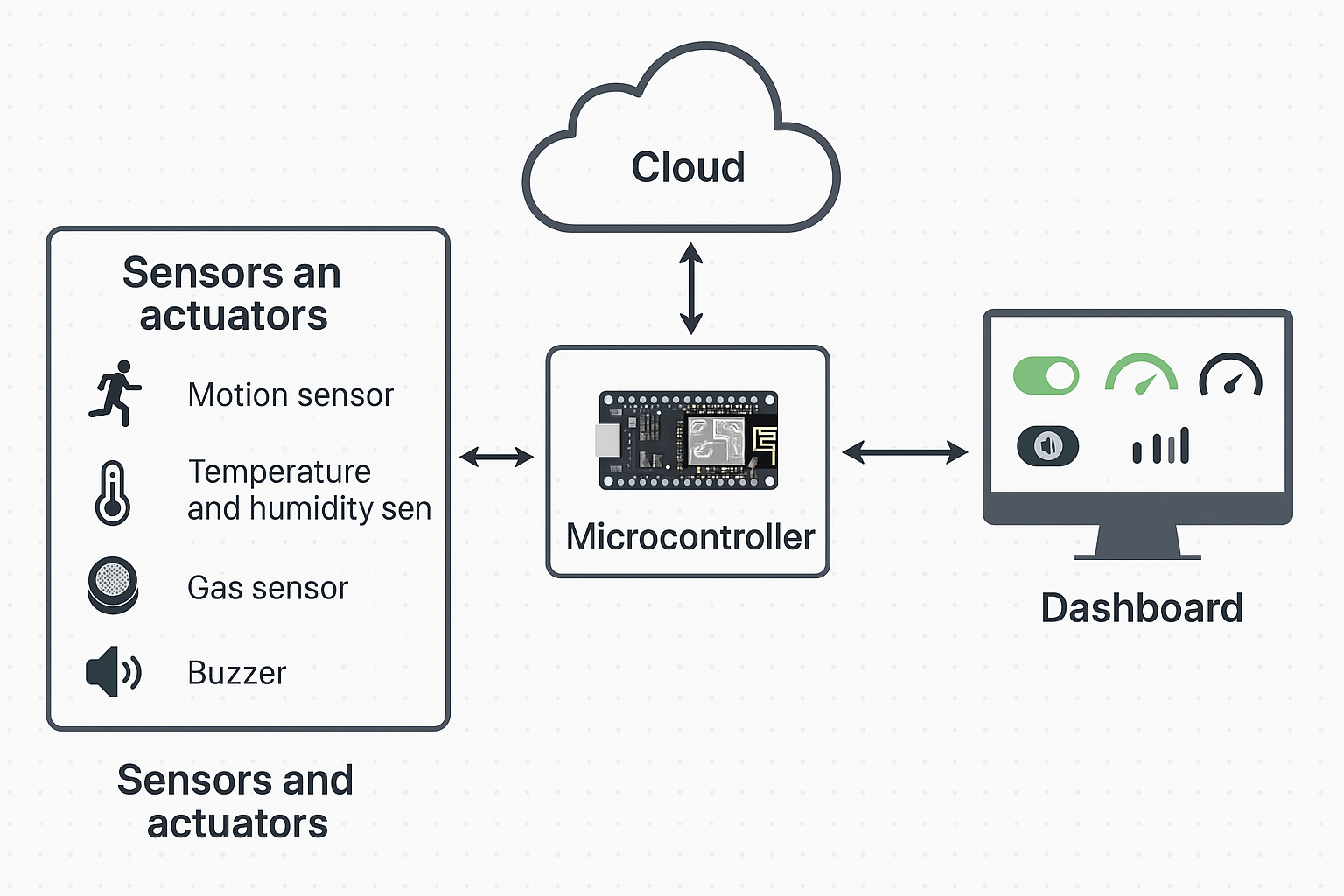
Figure 2: System Architecture Diagram
Technology Stack
Implementation
Hardware Components
The system integrates multiple components working in harmony to deliver smart home automation:
- DHT11 sensor: Measures temperature and humidity with ±2°C accuracy
- MQ-5 Gas sensor: Detects LPG, natural gas, and other combustible gases
- PIR motion sensor: Detects human presence with 5m range
- NodeMCU 1.0V: ESP8266-based microcontroller with built-in Wi-Fi
- Blynk IoT platform: Cloud-based control and monitoring interface
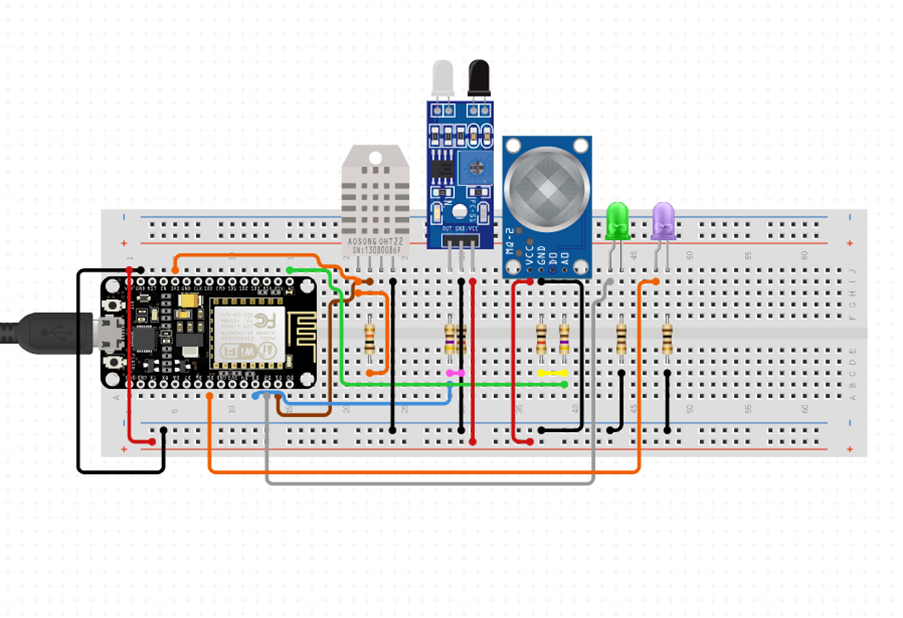
Figure 3: Circuit Diagram of the System
Software Implementation
The system was programmed using Arduino IDE with C++ for the microcontroller. Key algorithms include:
Pseudo Code for Motion Detection
1. BEGIN
2. READ data from motion sensor
3. IF motion is detected THEN
4.    TURN ON green LED
5.    UPDATE Blynk with motion status
6.    PRINT "Motion Detected: Green LED ON"
7. ELSE
8.    TURN OFF green LED
9.    UPDATE Blynk with no motion status
10.   PRINT "No Motion: Green LED OFF"
11. END IF
12. END
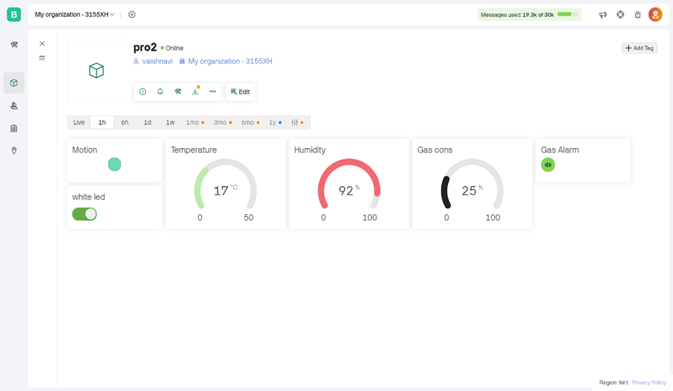
Figure 4: Blynk Mobile Interface
Results and Discussion
System Performance
The implemented system was evaluated across several key metrics:
| Metric | Result | Description |
|---|---|---|
| Response Time | 2-4 seconds | Average delay for remote commands execution |
| Energy Savings | 30% reduction | Compared to traditional systems |
| Device Integration | 10+ devices | Sensors and actuators successfully connected |
| User Satisfaction | 9/10 rating | Based on ease of use and convenience |
Discussion
The project successfully demonstrated the feasibility of WSN and IoT for home automation. Key achievements include:
- Real-time monitoring improved decision-making and system control
- Automated scheduling optimized energy usage
- Improved security features provided timely alerts
Challenges encountered:
- Reliance on stable Wi-Fi connectivity
- Initial setup costs for IoT devices and sensors
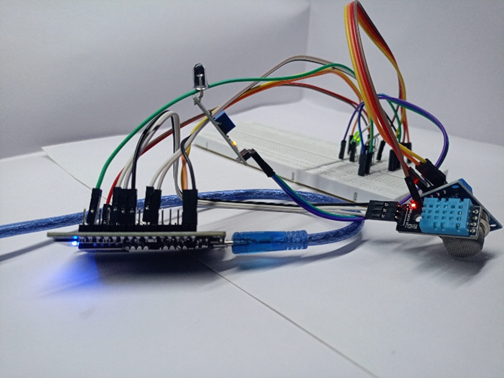
Figure 5: Final Implemented Circuit
Conclusion and Future Work
Conclusion
This project successfully implemented a smart home automation system using WSN and IoT technologies. The system provides:
- Real-time monitoring of environmental parameters
- Remote control of home appliances
- Energy optimization through automation
- Enhanced security features
The solution demonstrates significant improvements over traditional wired systems in terms of flexibility, scalability, and user experience while maintaining cost-effectiveness.
Future Work
Several directions for future enhancement have been identified:
- AI-Driven Automation: Implement machine learning for predictive automation
- Voice Assistant Integration: Add support for Alexa/Google Assistant
- Edge Computing: Reduce cloud dependence for faster response
- Improved Security: Advanced encryption and intrusion detection
- Energy Optimization: Incorporate renewable energy sources